


What Roller Skate Bearings Should I Get? The Honest Answer

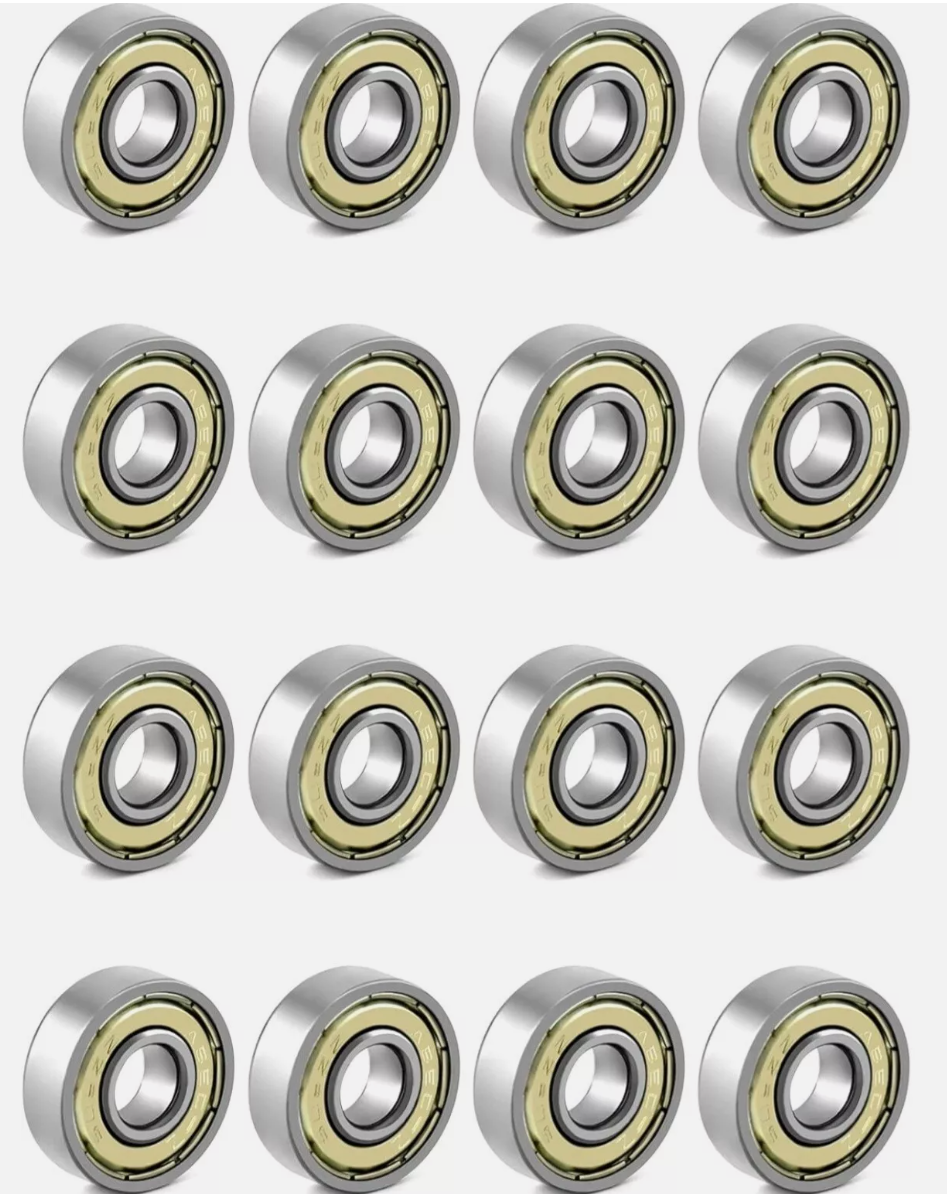
Choosing roller skate bearings should be simple. Unfortunately, manufacturers and sellers have surrounded them with impressive-sounding numbers, laboratory ratings and claims about incredible speed. Let’s cut through all of that. For most quad skaters, a reliable set of correctly sized steel bearings is all you need. Expensive ceramic bearings will not suddenly make you faster, and a bearing spinning for five minutes in somebody’s hand does not prove that it will perform better with a skater standing on it. Here is what actually matters.
First, Make Sure They Fit
A complete pair of quad skates requires 16 bearings, with two fitted into each wheel, but the hole through the centre must match your axles. Most modern quad plates use 8mm bearings, normally identified by the number 608. A standard 608 bearing measures 8mm internally, 22mm externally and 7mm wide. Traditional artistic, vintage and specialist plates may use 7mm bearings, normally identified as 627, measuring 7mm internally, 22mm externally and 7mm wide. Because both have the same 22mm outside diameter, they fit the same standard skate wheels, but the centre hole is different and must match the axle.
Letters after the number describe the bearing’s protection rather than its size: Z means one metal shield, ZZ or 2Z means metal shields on both sides, RS generally means one rubber seal and 2RS means rubber seals on both sides. Manufacturers do not always use these suffixes consistently, and many skate bearings use removable non-contact rubber shields rather than tight industrial seals, so check the product description rather than relying entirely on the printed code. You may also encounter smaller 167 or 688-style 7mm bearings, but these are specialist mini bearings and are not direct replacements for normal 627 bearings unless the wheels or suitable adapters are designed for them. If you are unsure, check the plate specification or measure the axle before ordering. Do not assume every quad skate takes an 8mm 608 bearing.
The Short Answer
For most recreational, rink, rhythm, derby and general-purpose skaters, I would recommend a decent set of serviceable steel bearings.
My straightforward recommendations are:
Best value: Standard black RollerBones bearings
Best proven all-rounder: Bones Reds
Affordable performance upgrade: Ventro hybrid ceramic bearings
Premium option: Bones Swiss or Swiss Ceramic
For specialist wheel changing: Bones Race Reds with extended inner races
Most skaters will be perfectly happy with either standard RollerBones bearings or Bones Reds. Everything beyond that falls increasingly into the category of marginal gains, convenience, premium materials or simply wanting the best equipment available.
There is nothing wrong with wanting premium bearings. Just do not expect them to transform your skating.
Does the ABEC Rating Matter?
Not nearly as much as people think. ABEC is a manufacturing tolerance standard originally designed for industrial bearings. It measures certain dimensional tolerances, but it does not tell you how well a bearing will cope with skating.
It does not directly measure:
Resistance to sideways skating loads
Resistance to impacts
Shield quality
Retainer strength
Lubrication
Contamination resistance
Durability in real skating conditions
How well the bearing fits your particular wheels and axles
A bearing can carry an impressive ABEC rating while still being a thoroughly average skate bearing. Bones avoids conventional ABEC marketing and instead uses its own Skate Rated specification, which considers factors relevant to skating rather than only industrial tolerances. That does not mean all ABEC-rated bearings are rubbish. It simply means you should not buy a bearing purely because the packaging says ABEC-7 or ABEC-9. A good bearing from a reputable skate manufacturer matters more than the largest number printed on the box.

Bones Reds
Bones Reds have become one of the standard recommendations in skating for a good reason. They are smooth, dependable, serviceable and reasonably priced.
They use removable non-contact shields, nylon ball retainers and skate-specific tolerances. The removable shield also makes them relatively straightforward to clean and lubricate.
They are not the cheapest bearings available, and they are not the most expensive. They sit in the sensible middle ground where performance, reliability and price meet.
If someone wants a proven bearing without spending premium money, Bones Reds remain an easy recommendation.

Standard Black RollerBones Bearings
Here is where things become interesting.
In real-world use, the standard black RollerBones bearings perform essentially like Bones Reds. They deliver the same kind of smooth roll and longevity but normally cost considerably less. You are not suddenly getting a dramatically inferior bearing because the shields are black instead of red. If you want dependable bearings and are more interested in skating than showing people the name printed on the shield, the standard RollerBones are arguably the better-value purchase. For most skaters, these are the ones I would choose.

What About Cheap Unbranded Bearings?
Cheap bearings can be perfectly usable, particularly for occasional recreational skating. However, quality control is usually less predictable. One set may roll nicely for years, while another develops noise or roughness after only a few sessions. Shields, retainers, lubrication and manufacturing consistency can all vary. Very cheap bearings also commonly arrive packed with heavy grease. This can make them feel slow when new, although the grease may provide useful protection against contamination and neglect. If the bearings already fitted to your skates roll smoothly, make no unpleasant noises and have no obvious play, there is no urgent reason to replace them merely because they are unbranded. Changing functioning bearings for another inexpensive set with a larger ABEC number is unlikely to achieve much.
Steel or Ceramic Bearings?
Most bearings sold as ceramic skate bearings are actually hybrid ceramic bearings. They use ceramic balls running inside steel races. Ceramic balls can be lighter, harder and smoother than conventional steel balls. In a well-manufactured bearing, this can reduce friction and improve performance. However, several realities are often conveniently left out of the sales pitch. The races are normally still steel, so hybrid ceramic bearings are not automatically rustproof. They still require sensible maintenance, and they can still be damaged by water, dirt and neglect. The performance difference is also much smaller once you put the bearing inside a wheel, tighten it onto a skate and place the weight of a skater on it. Bont, for example, produces both conventional steel and ceramic skate bearings and highlights material quality, polishing, precision and suitable lubrication alongside the headline rating. Those construction details matter more than simply attaching the word “ceramic” to a product. (india.bont.com) Ceramic bearings can be excellent. They are not magic.

Ventro Hybrid Ceramic Bearings
The Ventro 8mm hybrid ceramic bearings occupy a useful position between ordinary steel bearings and extremely expensive premium ceramics. I have used them in custom builds and received positive feedback from customers. They feel fast, perform well and offer a relatively affordable route into hybrid ceramic bearings. If you want something more performance-focused than standard steel bearings without paying Bones Swiss Ceramic money, they represent good value. Would I say every recreational skater needs them? No.
Would I happily use them in a higher-performance custom build? Absolutely.

Bones Swiss and Swiss Ceramic
Bones Swiss bearings are premium products with a long-standing reputation. The Swiss Ceramic version sits near the top of the range.
They are beautifully made and can provide excellent performance and longevity when properly maintained. If you race, skate at a high level, appreciate premium engineering or simply want the best components available, they are a legitimate option.
But let’s be honest about the cost-to-benefit ratio.
They can cost several times more than a standard set of steel bearings, but they will not make an average skater several times faster. Most people would notice a much larger difference by spending that money on suitable wheels, professional plate mounting, better-fitting boots or additional skating time.
Buy them because you value the engineering and want premium bearings, not because you expect them to compensate for technique.

Bones Race Reds
Bones Race Reds use extended inner races, removing the need for separate speed washers and bearing spacers in the intended setup. Their main advantage is convenience. Wheels can be installed and removed without dealing with loose spacers and washers, and the integrated design helps position the bearing assembly consistently. They can be particularly useful for skaters who regularly change wheels. That said, they are not automatically necessary for ordinary rink skating. Standard Reds or RollerBones bearings will perform perfectly well when installed correctly.

KWiK Bearings
KWiK is Riedell’s bearing brand and covers everything from affordable recreational bearings to more expensive performance models. The KWiK Zenith is the most relevant option for most quad skaters, using polished chrome-steel races, heat-treated alloy balls and low-friction Delrin retainers. Riedell positions it as an affordable upgrade over the basic bearings supplied with entry-level skates, and Zenith bearings are commonly fitted to its better complete-skate packages. They are dependable, properly made skate bearings, but they occupy a very competitive part of the market alongside Bones Reds, standard RollerBones and QUBE Juice. If they are available at the right price, there is nothing wrong with choosing them, but I would not expect a dramatic difference between the Zenith and other reputable steel bearings in the same price range.

Bronson Speed Co. Bearings
Bronson Speed Co. produces skateboard bearings, but its standard 8mm bearings also fit modern quad-skate axles. The range starts with the affordable G2, moves through the more sophisticated G3 and includes shieldless RAW bearings and premium ceramic models. The G2 provides deep-groove raceways, removable shields and high-speed oil, while the G3 adds more developed retainers, raceway finishing and Bronson’s directional “Balls Out” design. The RAW is intentionally shieldless, noisy and exposed, which may appeal to skateboarders who want that distinctive sound but makes considerably less sense around dusty rink floors, outdoor grime and general quad-skate abuse. Bronson bearings are normally sold in packs of eight, so quad skaters need two packs. They are credible, well-designed bearings, particularly the G2 and G3, but make sure the price of two packs still represents good value compared with a complete set of 16 roller-skate bearings.

Sure-Grip QUBE Bearings
Sure-Grip’s QUBE range is designed specifically with roller skating in mind and currently includes the entry-level Teal, intermediate Juice and distinctive 8-Ball. The QUBE Juice uses a single labyrinth seal and Sure-Grip’s own grease, is available in 8mm and comes as a complete pack of 16. The QUBE 8-Ball is based on the classic Fafnir-style roller-skate bearing and uses eight balls rather than the seven found in most conventional 608 bearings, with the aim of spreading the load across more contact points. Older QUBE ranges have also included Gold and Ceramic models, although availability varies and they are no longer prominent in Sure-Grip’s current direct range. QUBE bearings are legitimate alternatives to Bones, RollerBones and KWiK, but the same rule applies: choose them because the specification, axle size and price suit you, not because one particular feature automatically guarantees more speed.

Do Roller Skate Bearings Need Spacers?
Bearing spacers sit between the two bearings inside a wheel. They can help maintain the correct distance between the inner bearing races, particularly when an axle nut is tightened firmly. However, quad skate wheels and their internal spacing are not always manufactured to one perfectly consistent dimension. A spacer that is too long can prevent the bearings from seating correctly. One that is too short may achieve very little. Many quad skaters use standard bearings without internal spacers and experience no problems. The important thing is to tighten the axle nut enough to remove excessive sideways movement without clamping the bearings so tightly that the wheel can no longer rotate freely. If you tighten the nut and the wheel suddenly becomes stiff, the bearing assembly is being pinched. Back the nut off slightly until the wheel rotates freely without excessive lateral movement.
The Free-Spin Test Is Mostly Nonsense
You have probably seen videos where somebody spins two unloaded wheels and declares whichever one rotates longest to have the better bearing.
It looks convincing, but it is not a meaningful representation of skating performance.
An unloaded free-spin test is heavily affected by:
Lubricant thickness
Shield drag
Wheel weight
How hard the wheel was spun
Axle-nut adjustment
Bearing alignment
Whether the bearing is new or worn in
A lightly lubricated bearing may spin for much longer by hand than a grease-packed bearing. That does not automatically mean it will perform better once it is carrying a skater’s weight.
The longest free-spin time does not automatically identify the fastest, strongest or most durable bearing.
It mainly identifies the bearing with the least unloaded resistance during that particular test.
Will Better Bearings Make Me Faster?
Possibly, but usually not by as much as you expect. Replacing damaged, rusty or extremely poor bearings with decent ones can make an obvious difference. Replacing perfectly functional steel bearings with expensive ceramics is likely to produce a much smaller change. Your wheels, skating surface, technique, fitness, wheel alignment and axle-nut adjustment can all have a greater effect.
If your skates feel slow, check the following before blaming the bearings:
Are the axle nuts overtightened?
Are the wheels rubbing against the plate or axle hardware?
Are the bearings fully seated?
Are any bearings rough, noisy or seized?
Are the wheels suitable for the skating surface?
Are the wheels excessively soft for the speed you want?
Is the plate correctly mounted and aligned?
Do not spend £100 on bearings to solve a problem caused by a £1 axle nut being too tight.
Indoor and Outdoor Bearings
You do not necessarily need different bearings for indoor and outdoor skating.
Outdoor skating does, however, expose bearings to more dust, moisture, grit and road debris. A bearing with effective shields and sensible lubrication is therefore valuable.
If you regularly swap between indoor and outdoor wheels, keeping a separate bearing set permanently installed in each set of wheels is convenient. It also reduces repeated removal, which can damage shields or wheel hubs if done carelessly. No conventional skate bearing should be treated as waterproof. Avoid puddles, never deliberately wash complete bearings in water and do not put wet skates away expecting everything to be fine.
When Should Bearings Be Replaced?
Bearings do not need replacing simply because they have reached a particular age.
Consider replacing them when:
They remain rough after cleaning and lubrication
They make grinding or scraping noises
There is excessive play
A shield or retainer is damaged
Corrosion is visible inside the bearing
They regularly seize or bind
The bearing no longer sits securely in the wheel
A slightly noisy bearing may continue working for quite some time, but grinding, severe play or intermittent locking should not be ignored.
Cleaning and Lubrication
Serviceable bearings can often be restored rather than replaced. Remove the accessible shield, clean the bearings using a suitable bearing cleaner and allow them to dry fully. Apply a small amount of proper bearing lubricant before reinstalling the shields. Do not use WD-40 as the final lubricant. It can help displace moisture and loosen contamination, but it is not a suitable long-term skate-bearing lubricant by itself. More lubricant is not necessarily better. Excess oil attracts dirt and can leak onto the wheel. Most importantly, never reinstall a cleaned bearing completely dry. It may spin impressively in your hand, but unlubricated metal surfaces will wear much more quickly.
So, What Bearings Should You Actually Buy?
Occasional or Beginner Skater
Use the bearings already fitted unless they are rough, damaged or unreliable. If they need replacing, a decent standard steel set is sufficient.
Regular Recreational or Rink Skater
Choose standard black RollerBones bearings or Bones Reds. Both provide smooth, dependable performance without unnecessary expense.
Performance-Focused Skater
Consider Ventro hybrid ceramics, Bones Swiss or another reputable premium bearing. Just keep your expectations realistic.
Skater Who Changes Wheels Frequently
Bones Race Reds can make wheel changes cleaner and more convenient because of their extended inner races.
Skater Who Wants the Best Regardless of Price
Bones Swiss Ceramic. They are premium bearings and priced accordingly. Whether the improvement justifies the cost is entirely personal.
What Bearings Does Pablo Use?
That depends entirely on where I am skating. For outdoor skating, I use my trusty standard black RollerBones bearings. They are reliable, well made and affordable enough that it is not a complete disaster if I ruin them with rain, seawater, road grime or, as has happened before, dog poo. Outdoor skating can be brutal on bearings, so I see little point fitting an extremely expensive set.
When skating indoors on a smooth roller-rink floor, my go-to choice is Ventro Hybrid Ceramic bearings. They roll exceptionally well, have proven reliable and do not cost a ridiculous amount of money. I have been using the same set for around a year, and they are still going strong. They are not maintenance-free. Like any skate bearing, they still need cleaning and relubricating at sensible intervals. However, based on my own experience, they offer an excellent balance of speed, reliability and price.
Final Verdict
For most quad skaters, standard black RollerBones bearings are the sensible value choice, while Bones Reds remain the safe, proven all-round recommendation. Hybrid ceramic bearings such as the Ventros offer an affordable performance upgrade, while Bones Swiss and Swiss Ceramic products are for skaters who specifically want premium components and are prepared to pay for them. Do not become obsessed with ABEC numbers. Do not judge bearings solely by unloaded free-spin videos. Do not assume ceramic automatically means waterproof, indestructible or dramatically faster. Buy the correct axle size, choose a reputable bearing, install it properly and keep it clean. Then stop spinning your wheels by hand and go skating.
A Note on Recommendations
This article combines technical information with my own experience of building, servicing and skating quad skates. Bearing performance can be affected by wheels, axles, installation, maintenance, skating surface, skater weight and skating style.
The recommendations are my honest opinion rather than a claim that one bearing will be best for every skater.
Smooth rolling. Properly priced. No marketing nonsense.


Comments